 AWP Labs
4D on an AWP structure: the model, the packages and the schedule share one code.
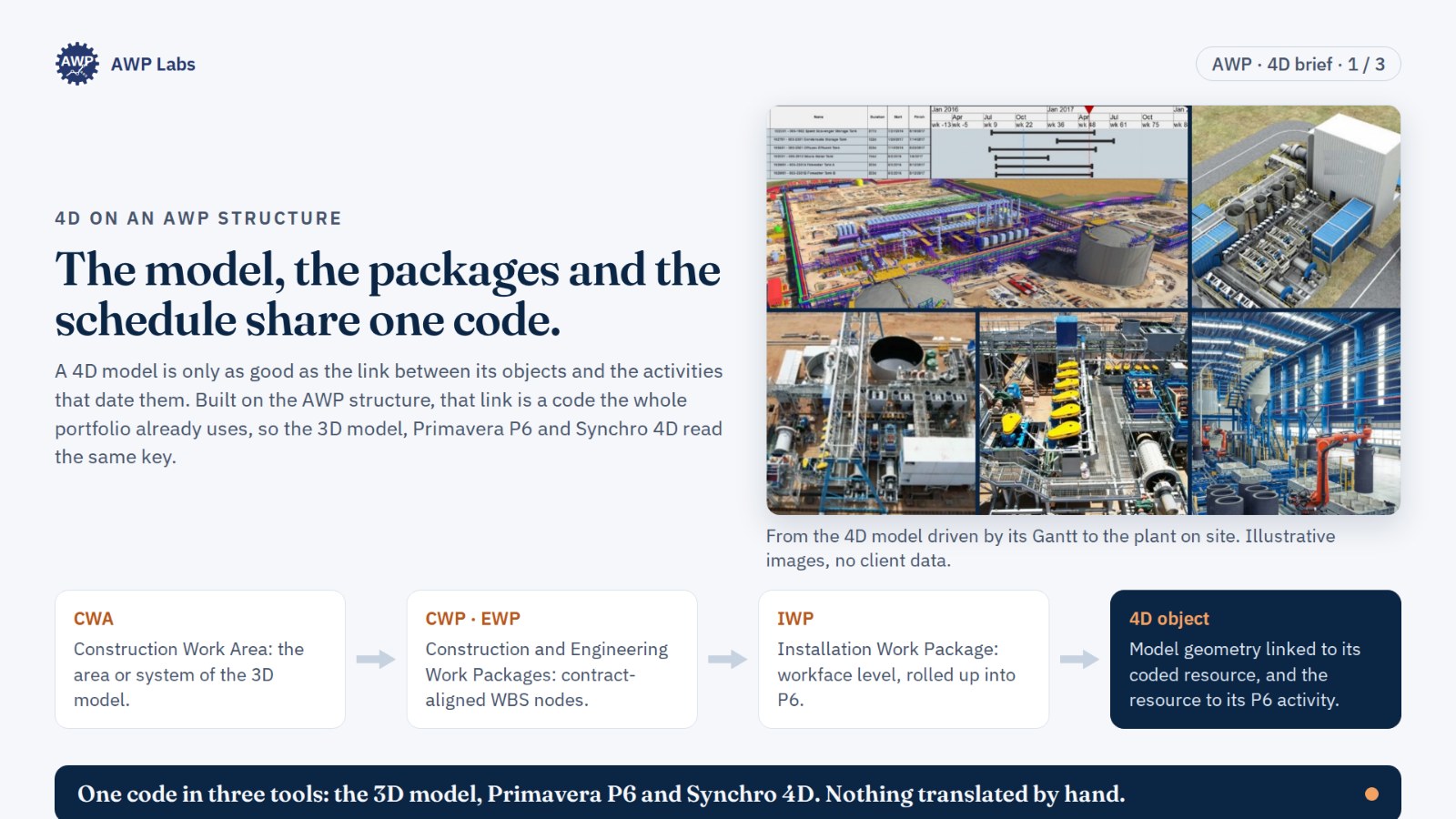
A 4D model is only as good as the link between its objects and the activities that date them. Three slides on why we build that link on the AWP structure, so the 3D model, Primavera P6 and Synchro 4D read the same key.
One code, no parallel scheme
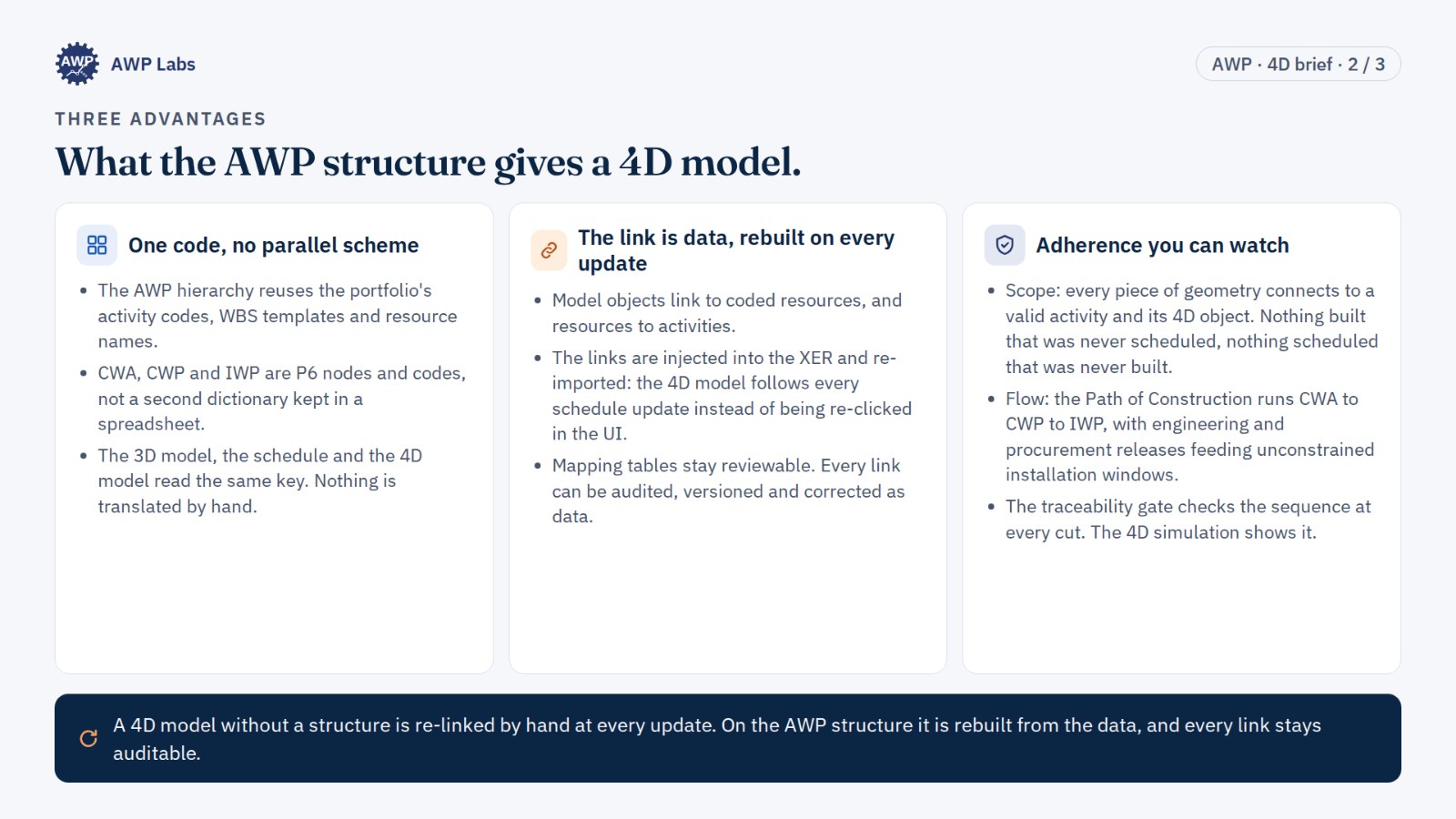
The AWP hierarchy, CWA to CWP and EWP to IWP, reuses the portfolio's own activity codes, WBS templates and resource names. CWA, CWP and IWP are P6 nodes and codes, not a second dictionary kept in a spreadsheet, so the 3D model, the schedule and the 4D model read the same key and nothing is translated by hand.
The link is data, rebuilt on every update
Model objects link to coded resources, and resources to activities. Those links are injected into the XER and re-imported, so the 4D model follows every schedule update instead of being re-clicked in the UI. The mapping tables stay reviewable: every link can be audited, versioned and corrected as data.
Adherence you can watch
Scope adherence: every piece of geometry connects to a valid activity and its 4D object, so nothing is built that was never scheduled and nothing is scheduled that was never built. Flow adherence: the Path of Construction runs CWA to CWP to IWP, with engineering and procurement releases feeding unconstrained installation windows. The traceability gate checks the sequence at every cut, and the 4D simulation shows it.
How it lands
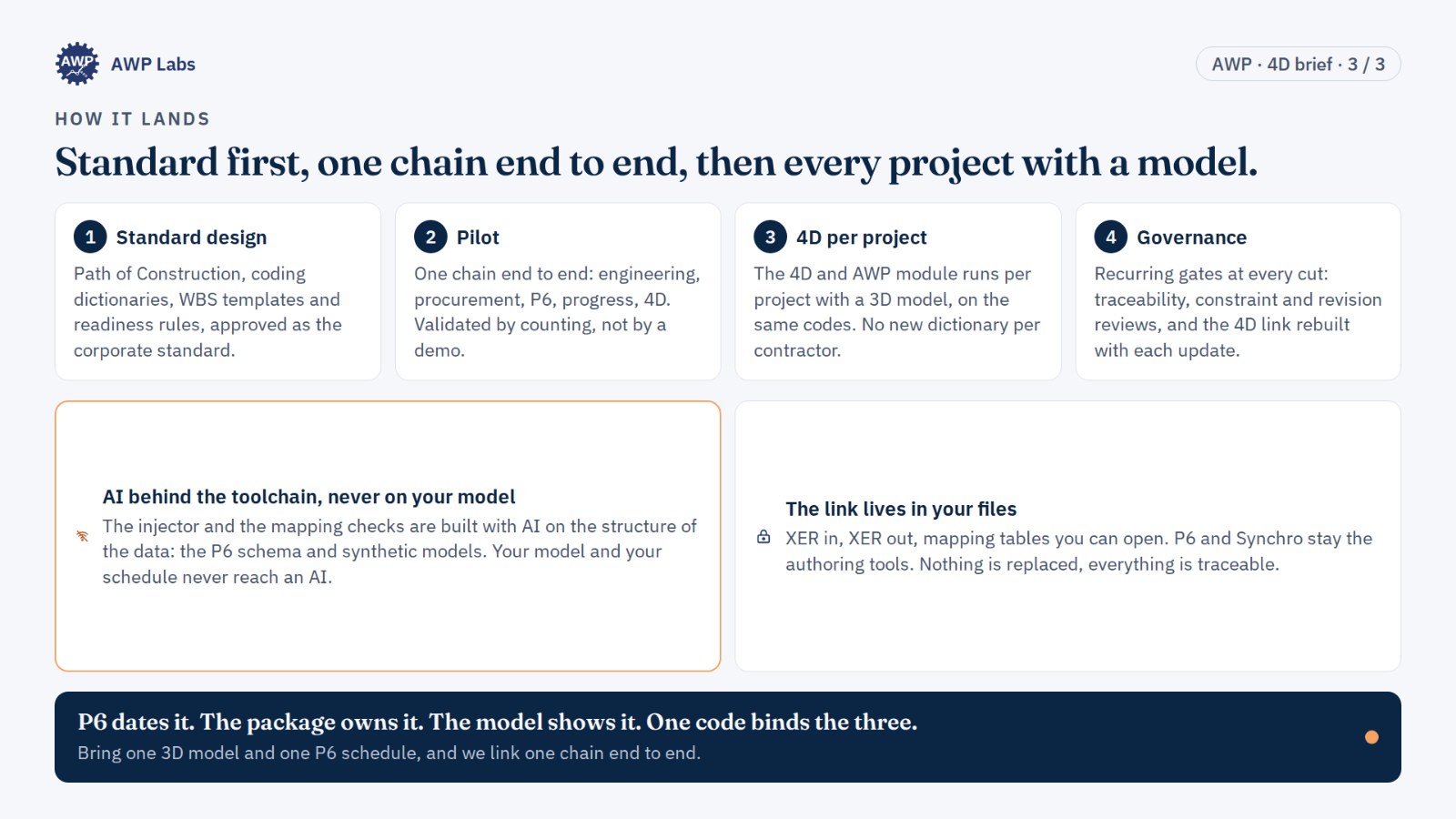
Standard design first: Path of Construction, coding dictionaries, WBS templates and readiness rules approved as the corporate standard. Then one chain piloted end to end, from engineering and procurement through P6 and progress to 4D, validated by counting. The 4D and AWP module then runs per project with a 3D model, on the same codes, and governance keeps the gates running at every cut. AI builds the toolchain on the structure of the data, never on your model or your schedule, and the link lives in your own files.